Trusted Materials
Roofing products are selected for weather resistance, fit, and long-term protection.

Trusted Roofers in Toronto
Toronto roof and attic ventilation balance to stop ice dams, attic moisture, and summer heat buildup. Ridge vents, box vents, soffit intake, baffles. Photo audit.
Get To Know
An attic without balanced ventilation in Toronto causes three predictable problems. Winter ice dams along the eaves. Summer attic temperatures 20+ degrees above outdoor air, baking the underside of the shingles and shortening roof life by years. Moisture buildup that condenses on the deck and grows mold on the sheathing. The fix is not adding a ridge vent and walking away. The fix is balancing intake at the soffit with exhaust at the ridge or roof vent, in the correct ratio specified by Ontario Building Code.
Roofing products are selected for weather resistance, fit, and long-term protection.
Registered, insured crews keep the site controlled and protect the property while they work.
Service Detail
Roof Ventilation work starts with the symptom you can see, then narrows down the roof detail causing it. These notes explain what we check before recommending repair, replacement, or maintenance.
 Detail 01
An attic without balanced ventilation in Toronto causes three predictable problems. Winter ice dams along the eaves. Summer attic temperatures 20+ degrees above outdoor air, baking the underside of the shingles and shortening roof life by years.
 Detail 02
Ventilation and insulation are paired upgrades. Insulation traps warmth and moisture. Without balanced ventilation, that moisture has nowhere to go.
 Detail 03
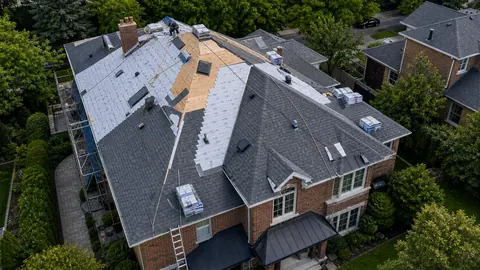
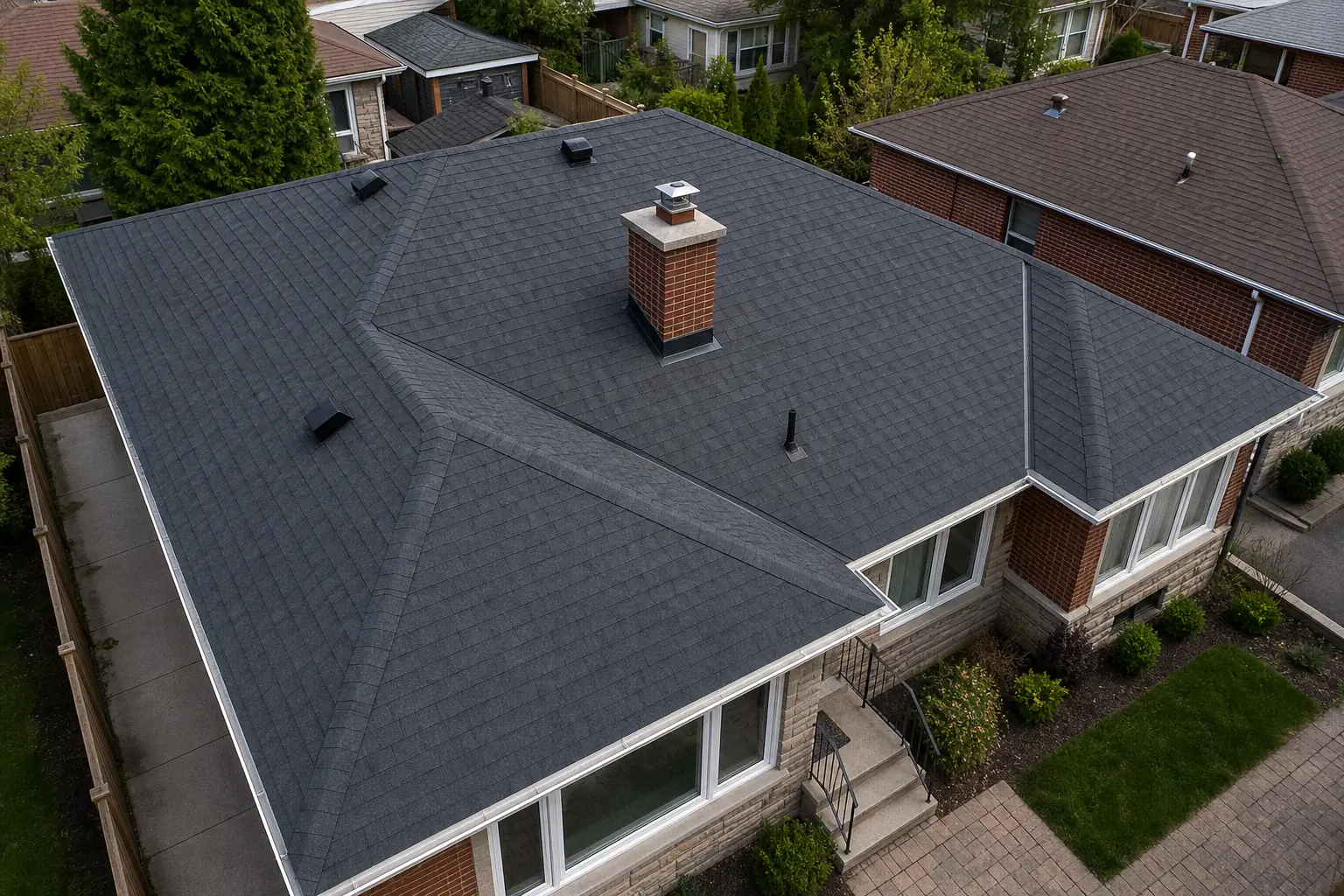
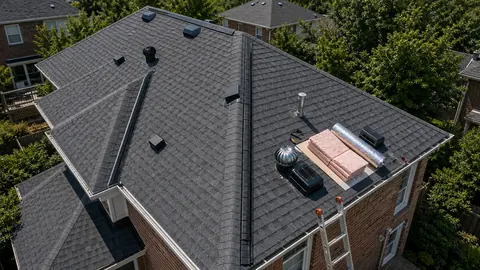
Continuous ridge vent: a vent that runs along the entire ridge under the cap shingles, exhausting attic air uniformly. Best exhaust system for most pitched roofs. Box vents (also called turtle vents or mushroom vents): individual roof vents installed at intervals across the upper roof field.
 Detail 04
The audit looks at three things. Existing exhaust: type, location, and total net free area (NFA). Existing intake: type, condition, and total NFA.
Detail 05Soffit intake retrofit (replacing solid soffit with vented soffit panel): $5 to $11 per linear foot installed. Continuous ridge vent installation during re-roof: $8 to $14 per linear foot. Box vent installation: $250 to $400 per vent.
Detail 06Watch for hot upper rooms, attic condensation, mould risk, uneven comfort, ice-related staining, or high energy use. A focused inspection confirms whether the issue is isolated or part of a larger roof problem.
Detail 07We review intake vents, exhaust points, insulation depth, vapour movement, air gaps, and blocked soffit areas. That keeps the recommendation tied to evidence instead of a generic roofing checklist.
Detail 08The repair path is built to balance airflow, protect insulation performance, and correct moisture paths before they damage the roof deck. If the damage is wider, the quote explains why a bigger scope may be needed.
Before We Quote
Better roofing advice comes from evidence, not guesswork. This is the checklist we work through before recommending the next move.
We look beyond the obvious stain and check nearby flashing, valleys, vents, joints, and drainage paths tied to roof ventilation.
The quote explains what needs immediate protection, what can wait, and what is simply surface wear.
Clear photos make the recommendation easier to understand and help you compare repair, maintenance, or replacement options.
The inspection includes nearby materials so a small fix does not leave another weak point waiting for the next storm.

Clear Recommendation
Homeowners should not have to choose between a vague patch and an oversized project. The recommendation separates immediate protection, practical repair scope, and longer-term roof health.
Stop active water entry, secure loose materials, and reduce immediate interior damage risk.
Confirm whether targeted roof ventilation work can solve the problem without overbuilding the project.
Review age, ventilation, drainage, flashing, and repeated problem areas before recommending a bigger plan.
Repair Or Replace
Use these steps to move from the visible problem to a practical roofing plan. Start at step one, then only move bigger when the evidence supports it.
Airflow Check
Start here when hot rooms, attic moisture, ice-related staining, or uneven indoor comfort can be traced to one controlled area. The goal is a focused roof ventilation repair before recommending a larger project.
Moisture Plan
Move to replacement planning when the roof ventilation issue is part of broader wear instead of a single isolated fault. This keeps roof ventilation requests from turning into repeated patchwork.
Attic Photos
Use inspection first when the visible roof ventilation symptoms do not prove the cause. Photos and notes separate repairable items from bigger roof risks.

Season Risk
Bad weather can expose weak points around roof ventilation. This step checks whether the problem is urgent damage, delayed wear, or a pre-existing roof weakness.
Vapour Path
Many roof ventilation requests come back to water movement. We check how rain travels across the roof, where it slows down, and which details need protection.

Vent Detail
Finish by checking the roof details around roof ventilation. Small junction failures often decide whether a simple repair holds or the roof needs a broader scope.
What We Do
From small repairs to complete replacements, each recommendation is focused on stopping damage, protecting the structure, and keeping the process clear.
Fast help for leaks, damaged tiles, weak flashing, and weather-related roof problems before they become bigger structural issues.
Roof Repairs ->Replacement and installation support for older roofs that need a stronger, cleaner, longer-lasting roofing system.
Roof Replacement ->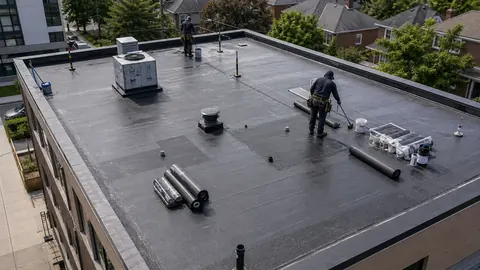
Flat roof repairs and maintenance focused on drainage, insulation, membrane performance, and long-term waterproofing.
Flat Roof Repairs ->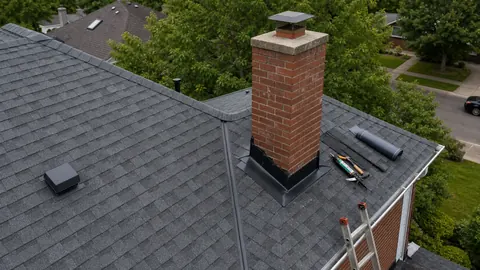
Chimney repair support for flashing, mortar, and roofline details that can cause leaks when they are left untreated.
Chimney Repairs ->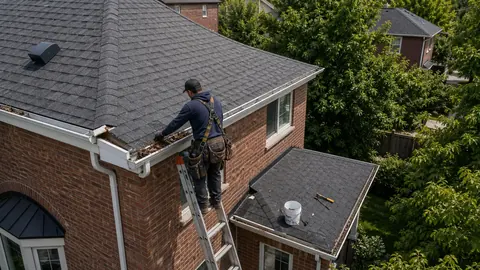
Gutter repair and maintenance that moves water away from the roofline and helps prevent avoidable exterior damage.
Gutter Repairs ->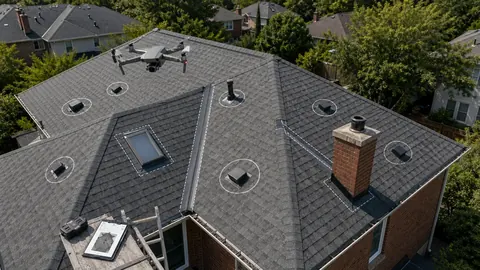
Roof inspection support for hard-to-reach details, early problem spotting, and clearer recommendations before work begins.
Drone Inspections ->Customer Reviews
"Michael called promptly, examined my roof and issued a quote. My roof was repaired within a week, and the team left everything tidy."
"The team explained the roof issue clearly and helped us understand what needed to happen before the leak spread further."
"Professional, clear about the cost, and easy to deal with from the first call through the finished work."
Service Questions
Quick answers about roof ventilation before you schedule roofing work.
Three signs. Recurring ice dams along the eaves every winter. Attic noticeably hotter than outdoor air in summer (more than 15 degree difference). Visible moisture, frost, or mold on the underside of the roof deck.
No. A ridge vent without matching soffit intake either does not function or starves the attic and pulls air from inside the home. They must be installed together as a balanced system.
Yes, paired with adequate insulation. The combination keeps the attic cold enough that snow on the roof does not melt unevenly, eliminating the differential that drives ice damming.
Sometimes, but most Toronto homes do better with passive ridge-vent-plus-soffit systems. Powered fans can depressurize the attic and pull conditioned air from the home, raising your heating and cooling costs.
Service Locations
Roofers Toronto supports homeowners across nearby communities with clear inspections, roof repairs, and practical next steps.
More Roof Repair Services
One crew, one phone number, every common roof repair across Toronto and the GTA.
Get In Touch
Call the team or send a quick quote request and we will help you understand the best next step for your roof.